Room Darkening vs. Blackout Shades: What's the Difference?
Both terms come up constantly when people are shopping for room darkening window treatments. And the way they get used — sometimes interchangeably — does not help. Here is the actual difference between the two, and how to figure out which one your space really needs.
What Room Darkening Window Treatments Do
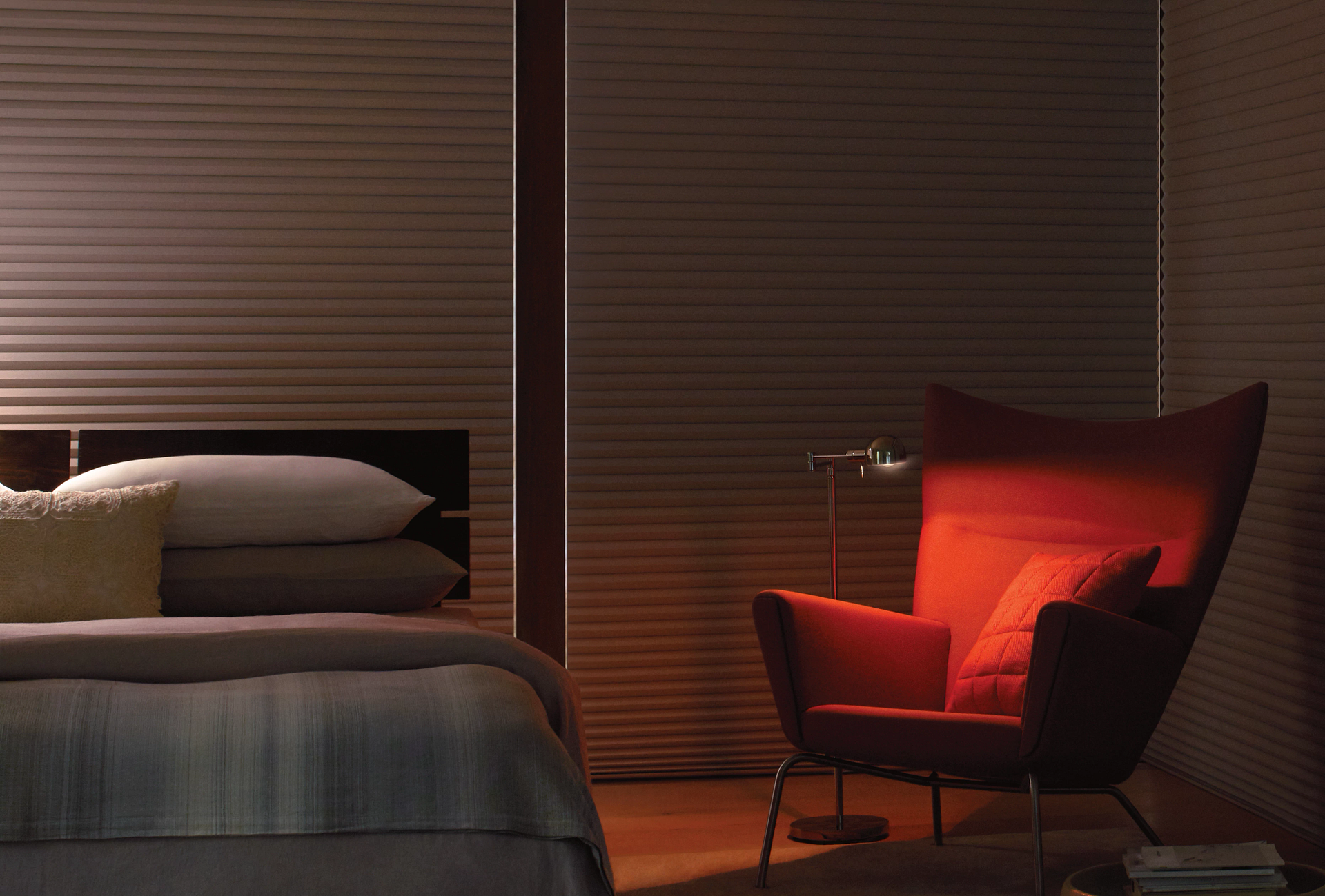
By design, room darkening shades block most incoming light. Most products in this category block somewhere between 95 and 99 percent of direct sunlight. That is a significant amount. In a normal room, room darkening window treatments create a noticeably dimmed environment — comfortable for naps, movies, or just cutting down on afternoon glare.
The catch is the edges. Room darkening shades block the fabric portion of the window effectively. But light can still slip in around the frame — the gap between the shade and the window casing — especially if your windows have deep or uneven reveals. For most rooms and most people, this is not a problem. You get a dark, comfortable space. A little ambient glow around the edges is a reasonable trade-off.
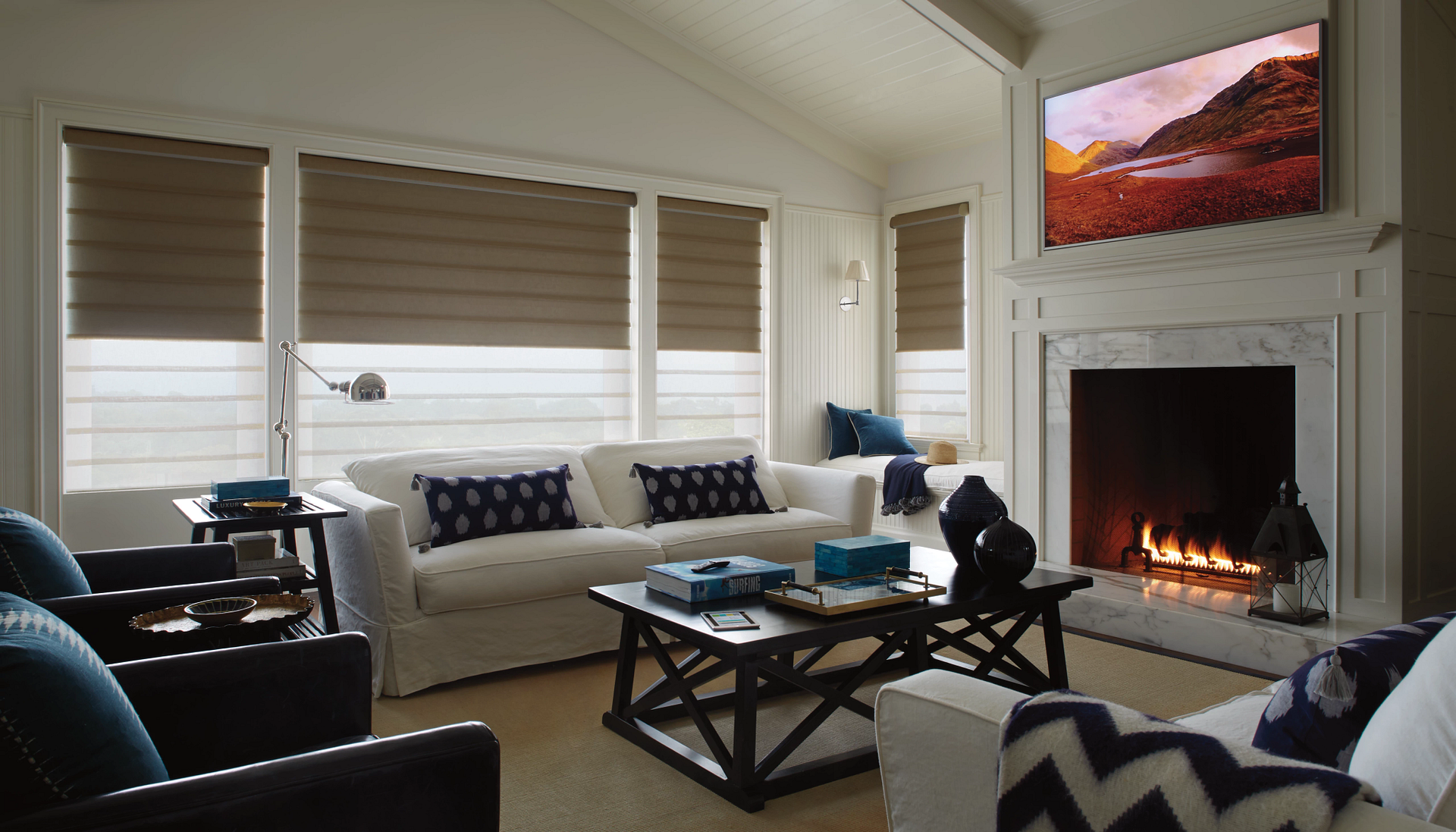
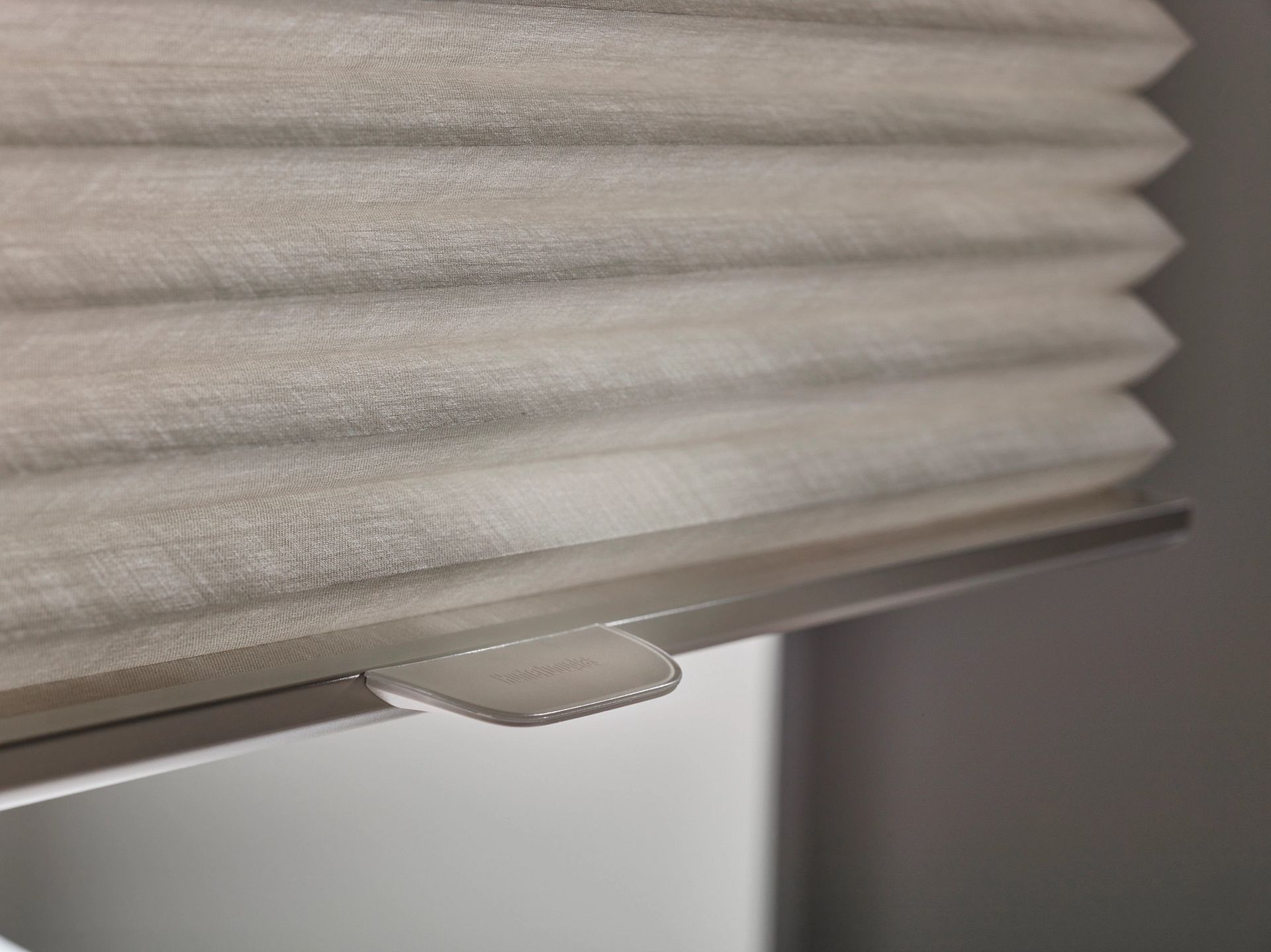
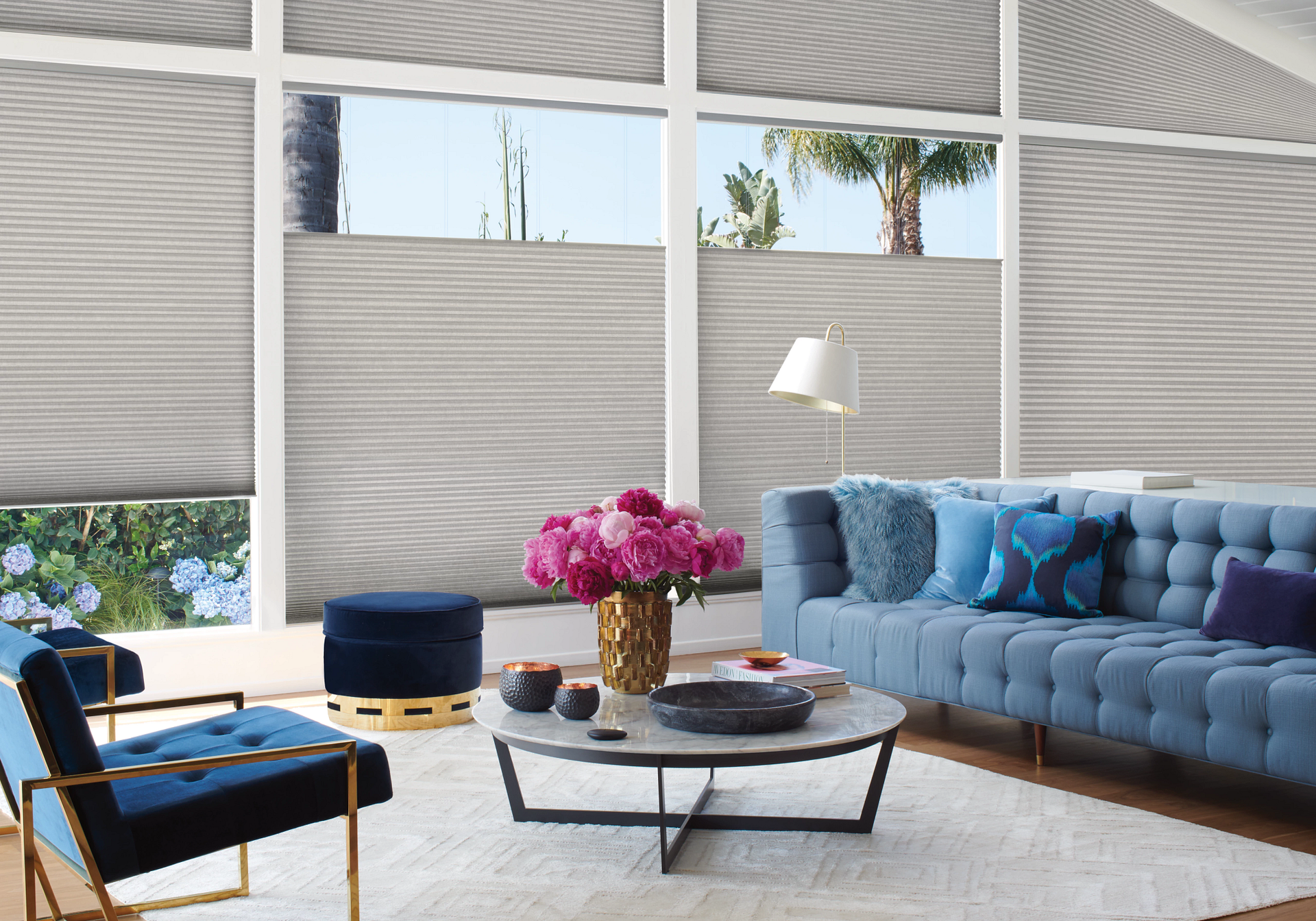
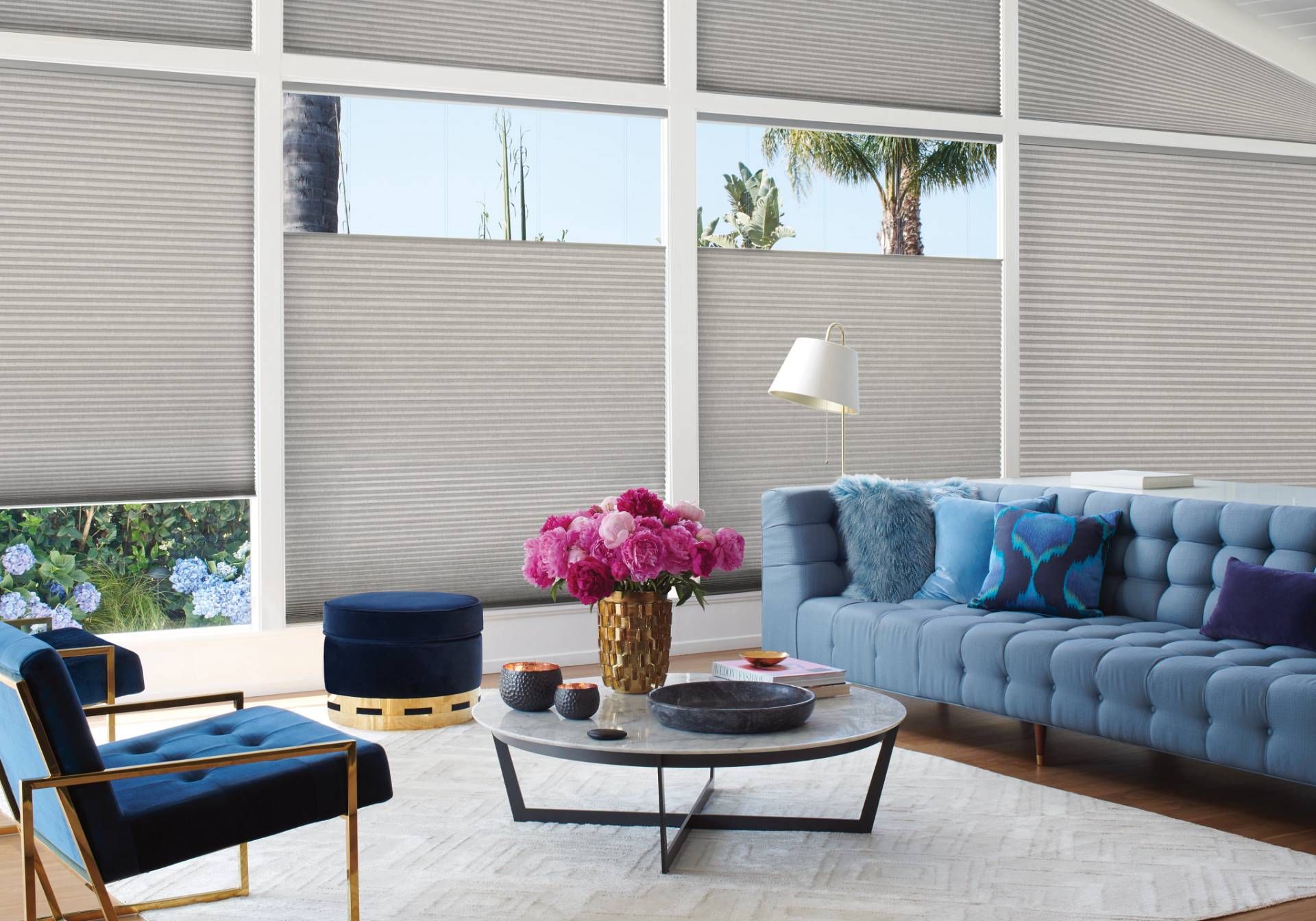
Room darkening options are available across a wide range of products — cellular shades, roller shades, Roman shades, and more. Hunter Douglas Duette® Cellular Shades and Graber® Cellular Shades are both available in room-darkening fabric weights, and both maintain their clean, polished appearance even with the heavier opacity.
What are Blackout Window Treatments?
True blackout shades are designed to eliminate light — not just reduce it. The fabric blocks 100 percent of direct light transmission, and the best blackout systems are also engineered to minimize edge glow. Some use side tracks or channels that close off the gap between the shade and the window frame. Others use a deeper pocket mount to physically reduce the amount of light that can wrap around the edges.
Hunter Douglas fabrics, like those in Duette® Cellular Shades and Sonnette® Roller Shades, are certified to block 100 percent of light through the material itself. Pair those with an inside mount in a deep window well, or add a side channel system, and you can get as close to a fully dark room as most people will ever need.
True blackout performance requires both the right fabric and the right installation approach. A blackout fabric in a shallow outside mount is still going to let light in around the edges. The installation details matter as much as the product choice.
Who Needs Blackout Shades?
Shift workers who sleep during the day. Infants and toddlers whose nap schedules depend on darkness. Home theater rooms where any ambient light degrades the picture. These are the situations where full blackout window treatments are genuinely worth the extra investment and attention to installation.
For most bedrooms, room darkening is usually enough. People sleep fine with a little ambient glow around the window frame. The room feels dark, the shade performs well, and you have more flexibility in product selection and mounting options.
A common mistake is overkill in the wrong direction. Full blackout for a room that only needed room darkening often means more expensive products, more complex installation, and no real improvement in sleep quality. You might even be tempted to sleep too late in the day! And going the other direction — choosing a light-filtering shade when you actually needed room darkening — means you will be back shopping again in a few months.
Which Rooms Should Have Blackout or Room Darkening Shades
Bedrooms are the most common conversation. If you sleep on a regular schedule and live somewhere with normal residential light levels — which most of Missoula and the Bitterroot Valley is — room darkening is almost always sufficient. If your bedroom faces east and you are a light sleeper who wakes with the sunrise, or if the room faces a streetlight, blackout is worth considering.
Living rooms and family rooms rarely need blackout. Room darkening roller shades or cellular shades give you glare control and privacy without sealing the room off entirely. In Montana, where natural light is genuinely valuable most of the year, preserving your ability to open things up during the day matters.
Media rooms and home theaters are the clearest case for blackout. Light sources degrade contrast and color on screens, and a room that you specifically set up for viewing benefits directly from full light elimination.
Nurseries are in the middle. Blackout is popular here — and understandably so — but a high-quality room darkening shade installed with a tight inside mount often performs well enough to support a nap schedule without going to the full complexity of a blackout system.
Blackout and Room Darkening Shades Near Missoula, MT
For room darkening, Hunter Douglas Duette® Cellular Shades are one of the most versatile options we carry. The honeycomb cell construction provides excellent insulation and light control (a meaningful benefit in Montana's climate), and it is available in single- and double-cell configurations with room-darkening fabric in a wide range of colors.
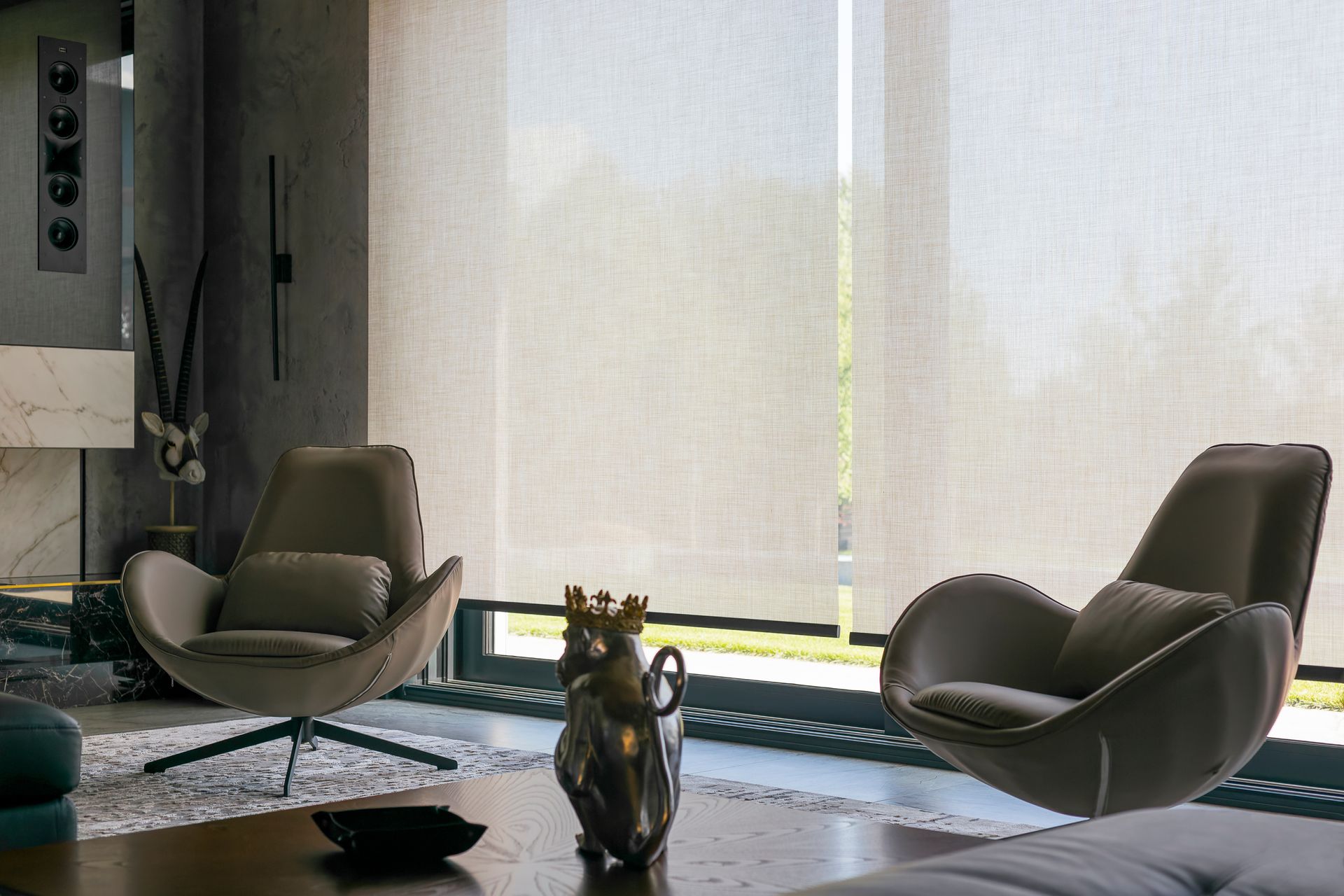
For blackout performance, Hunter Douglas Sonnette® Roller Shades will give you the clean, low-profile look of a roller shade with 100 percent light-block fabric. Alta cellular shades are another strong option, available in both room darkening and blackout specifications while boasting luxurious fabrics in a wide range of colors and patterns.
Not sure which direction to go? We can help. The Blind Guy Missoula offers free in-home consultations across our full service area, including Florence, Stevensville, Victor, Hamilton, and the surrounding Bitterroot Valley communities. We will take a look at your windows, your room conditions, and your priorities, and tell you exactly what we would put in there. Reach out today to get started.